Dear parents,
As part of our inquiry into 'How and why changes happens?' we are wanting to offer students true stories about change.
We are wondering what are meaningful or significant changes that have happened in your life?
Would you be willing to share a story with students about a change that
you have experienced or witnessed? We are thinking about ten minute
story telling sessions.
The change story may be:
*A personal experience or a change that you witnessed in another person, community or a country
*Recent or from a long time ago
The sharing could be:
*To a large group or small group
*Accompanied by pictures, music or any other props if you would like
*Via Skype if you were unable to leave work during the school day
Please let teachers know in person or through email if you have any
ideas. Please encourage others to come in to.
hilvert.alexandra.a@edumail.vic.gov.au
Tuesday, 29 July 2014

Wednesday, 16 July 2014
Book Talk is Back
Calling all parents to our new Monday morning time slot
Book Talk will start again in week 2 (21/7/14). We are so keen to have parents involved. We welcome all parents back who can continue to come and invite new parents (and grandparents) to get involved. Book Talk is a small group book sharing opportunity that supports students curiosity and momentum as readers. The sessions run from 9.10am till about 10am on Monday mornings. Parents will always be supported by teachers. We welcome any time that parents have to share – this may be a one off or every week. Please note that the day change is because of chess education this term. We apologies for any inconvenience this causes.
Tuesday, 3 June 2014
Seeking a parent/helper one hour a week to support a small group of sustainability leaders
We are currently on the look out for a parent (or parents, grandparents etc) who is able to support the Junior School Council students for 1 hour a week on a Friday afternoon. The group is also being supported by Kerri Gibson (assistant principal), Tim Aris (5/6 teacher) and Alexandra Hilvert (3/4 teacher and sustainability coordinator). The role would involve working with a group of 10 committed and passionate students (from yrs 3-6). This role will not require any planning and there will always be a teacher to support you.
At the moment the students are beginning to brainstorm a whole school sustainability celebration day in term 3. This event will involve all students, teachers and interested parents. The Junior School Council's goal is to empower students to take leadership and extend their student voice across our community. This role represents an opportunity to support students to make a positive difference. Please to or email or speak with us if you are keen and please encourage others who you think would enjoy this opportunity.
Alexandra Hilvert
hilvert.alexandra.a@edumail.vic.gov.au
At the moment the students are beginning to brainstorm a whole school sustainability celebration day in term 3. This event will involve all students, teachers and interested parents. The Junior School Council's goal is to empower students to take leadership and extend their student voice across our community. This role represents an opportunity to support students to make a positive difference. Please to or email or speak with us if you are keen and please encourage others who you think would enjoy this opportunity.
Alexandra Hilvert
hilvert.alexandra.a@edumail.vic.gov.au
Monday, 2 June 2014
How Wolves Change Rivers
As a part of the Change Inquiry, the students were given the opportunity to watch this fantastic video about how the introduction of wolves in the Yellowstone National Park can impact a huge range of the elements in the environment.
Thursday, 29 May 2014
Numeracy weeks 5 & 6
During weeks 5 and 6, some students in the 3/4 neighbourhood have been further investigating decimal fractions through several visual materials. Other students have moved into operations and specifically prolem solving through addition stories. We have also began to look at the concept of 'relationships' (number can be used to compare and order) through our data collection project.
Decimal Fractions
The two materials we focused on during our investigation on decimal fractions during week 5 and 6 were decimats and deciwire. These were both very hands on materials that allowed students to really see visually the size of the number made up of tenths and hundredths. These materials were specifically used to correct the misconception that longer the number is after the decimal point, the larger the value of the number (misconception that 0.25 < 0.3 because 25 is larger than 3). This is often called longer-is-larger misconception. Students were instructed to create and order decimal fraction numbers using decimats during week 5. In week 6, we consolidated this idea by creating several decimal numbers with straws and string (see photo).
Addition Stories
To begin our investigation into operation, we looked into various word problems in the form of stories. We investigated exactly what the problem was asking us to do, what informations were given, which information was important to the question and which were not and what operation or rule we would use to solve the problem. Children had a lot of fun creating their own addition stories and sharing them with the group to see whether the others could figure them out.
Data Project
As a part of our investigation into the four big ideas of Mathematics, we are beginning our exploration of the concept of 'relationship' through the data project. In this project, students are given the question "What books do children read in our Neighbourhood?" Students plan how they collect and represent the data during the maths investigation sessions. This week we began planning the collection of the data by looking at the three steps; 1. What are we going to find out? 2. What data can we get? and 3. How do we get the data? The students will then look into designing the collection of data and reflect on its efficiency. Finally, they will organize, categorise, analyse and represent the data in a way appropriate to its context.
Home Learning
Decimal fractions - ordering decimal numbers is very important in children's understanding. Here are two games I like playing.
Balloon Game
Flower Power game
Addition Stories - Creating addition stories is always fun at home. We often find a picture and make up stories to challenge each other. Sometimes we insert unnecessary information to try and trick each other. This website has a huge selection of word problems for you and your children to look at together. It's important to always discuss what the question is asking them to do. Sometimes getting the children to draw a diagram of the problem can help.
Decimal Fractions
The two materials we focused on during our investigation on decimal fractions during week 5 and 6 were decimats and deciwire. These were both very hands on materials that allowed students to really see visually the size of the number made up of tenths and hundredths. These materials were specifically used to correct the misconception that longer the number is after the decimal point, the larger the value of the number (misconception that 0.25 < 0.3 because 25 is larger than 3). This is often called longer-is-larger misconception. Students were instructed to create and order decimal fraction numbers using decimats during week 5. In week 6, we consolidated this idea by creating several decimal numbers with straws and string (see photo).
 |
| Check out our deciwire on our wall! |
 |
| This is a very hands on way of looking at decimal fractions. Here, children discuss the decimal number while creating the deciwire. |
Addition Stories
To begin our investigation into operation, we looked into various word problems in the form of stories. We investigated exactly what the problem was asking us to do, what informations were given, which information was important to the question and which were not and what operation or rule we would use to solve the problem. Children had a lot of fun creating their own addition stories and sharing them with the group to see whether the others could figure them out.
Data Project
As a part of our investigation into the four big ideas of Mathematics, we are beginning our exploration of the concept of 'relationship' through the data project. In this project, students are given the question "What books do children read in our Neighbourhood?" Students plan how they collect and represent the data during the maths investigation sessions. This week we began planning the collection of the data by looking at the three steps; 1. What are we going to find out? 2. What data can we get? and 3. How do we get the data? The students will then look into designing the collection of data and reflect on its efficiency. Finally, they will organize, categorise, analyse and represent the data in a way appropriate to its context.
Home Learning
Decimal fractions - ordering decimal numbers is very important in children's understanding. Here are two games I like playing.
Balloon Game
Flower Power game
Addition Stories - Creating addition stories is always fun at home. We often find a picture and make up stories to challenge each other. Sometimes we insert unnecessary information to try and trick each other. This website has a huge selection of word problems for you and your children to look at together. It's important to always discuss what the question is asking them to do. Sometimes getting the children to draw a diagram of the problem can help.
Premiere Reading Challenge
The annual Victorian Premier's reading Challenge is upon us again and we are excited at what books children will be reading this year!
To begin with, some parents have been requesting the link to the Premier reading Challenge form so here is the link:
http://www.education.vic.gov.au/Documents/about/events/prc/consentecschools.pdf
I thought it might be nice to recommend a few books during the challenge so here are a few of my selections...
 1. THE NAME OF THIS BOOK IS SECRET by Pseudonymous Bosch
This series by the wonderfully named author is written in a witty manner, with a lot of play on words and acrobatics with language. The storyline isn't bad either. There are five books in the series and they are, by all accounts, equally funny and engaging. We found this copy at Readings.

2. WONDER by RJ Palacio
This book was my daughter's favourite for a long time. It is a beautiful story about a 10 year old boy with Treacher Collins syndrome which causes deformities on his face. I like this book as it is written not only through the eyes of the boy, but through many different POVs. Also found at Readings.
 3. HOWL'S MOVING CASTLE by Dianne Wynne Jones
Yes, I too, loved this film. But it was a book first. Here is a quote:
"Wizard Howl's castle was rumbling and bumping toward her across the moorland. Black smoke was blowing up in clouds from behind its black battlements. It looked tall and thin and heavy and ugly and very sinister indeed."
To begin with, some parents have been requesting the link to the Premier reading Challenge form so here is the link:
http://www.education.vic.gov.au/Documents/about/events/prc/consentecschools.pdf
I thought it might be nice to recommend a few books during the challenge so here are a few of my selections...
 1. THE NAME OF THIS BOOK IS SECRET by Pseudonymous Bosch
This series by the wonderfully named author is written in a witty manner, with a lot of play on words and acrobatics with language. The storyline isn't bad either. There are five books in the series and they are, by all accounts, equally funny and engaging. We found this copy at Readings.
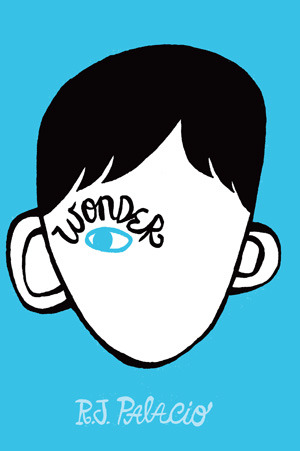
2. WONDER by RJ Palacio
This book was my daughter's favourite for a long time. It is a beautiful story about a 10 year old boy with Treacher Collins syndrome which causes deformities on his face. I like this book as it is written not only through the eyes of the boy, but through many different POVs. Also found at Readings.
Yes, I too, loved this film. But it was a book first. Here is a quote:
"Wizard Howl's castle was rumbling and bumping toward her across the moorland. Black smoke was blowing up in clouds from behind its black battlements. It looked tall and thin and heavy and ugly and very sinister indeed."
Perfect for looking at the setting of a narrative, don't you think? I found this for my Kindle, but I'm sure you can find it in bookshops. If not, The Book Depository is pretty good.
That's my three recommendations for now (I will do some more another time). If you have any recommendations of your own, please add it on the comments below!
Thanks!
Wednesday, 28 May 2014
ICT User Agreement
Hello everyone,
As you are aware all students have been signing the Information and Communication Technology (ICT) user agreements across the school.
The new ICT User Agreement, which has been distribute
Please find posted here a digital copy of the ICT User Agreement for your reference.
It can be downloaded and printed from here also.
Thank you for your ongoing support
ICT USER agreement.docx
As you are aware all students have been signing the Information and Communication Technology (ICT) user agreements across the school.
The new ICT User Agreement, which has been distribute
Please find posted here a digital copy of the ICT User Agreement for your reference.
It can be downloaded and printed from here also.
Thank you for your ongoing support
ICT USER agreement.docx
Subscribe to:
Posts (Atom)